Ren (REN) 2026 Price Analysis & Prediction

Jakarta, Pintu News – Ren (REN) is back in the discussion after a recent report highlighted the project’s far different condition compared to its prime in 2021. The token reached a high of US$1.52, or around Rp25,975, but in April 2026 it was trading at around US$0.004, or around Rp68. This 99.7% decline not only reflects the cryptocurrency’s weak price, but also relates to the shutdown of the project’s main infrastructure, delisting from several major exchanges, and reputational issues in the successor ecosystem.
1. Ren Once Had an Important Function in the Crypto World
At its inception, Ren was developed to address a real problem in the crypto industry, namely the transfer of assets across blockchains. Through RenVM, users could convert Bitcoin (BTC), Zcash (ZEC), or other assets into a wrapped version on the Ethereum (ETH) network, such as renBTC, to be used in the DeFi ecosystem. At the time, this solution was considered relevant because it provided a way for non-Ethereum assets to enter lending applications, yield farming, and other decentralized finance services.
REN also has a clear economic function in the system. Darknodes that secure the network must stake REN as collateral, and are then rewarded with cross-chain transaction fees. This means that in the past, REN tokens did have a utility that was directly related to the operation of the protocol, not just a speculative asset.
Also Read: Gold, Oil, and Silver Perpetual Volume Explodes 65,463%: What’s Up?
2. Alameda’s Acquisition Was a Big Turning Point
The situation began to change after Ren merged with Alameda Research in February 2022. At the time, the move was positioned as an effort to accelerate the development and decentralization of Ren’s technology. However, after FTX and Alameda collapsed in November 2022, the market realized that the custodial infrastructure underpinning RenVM was heavily dependent on the latter.
As a result, Ren immediately warned users to move their assets back to the original chain. RenVM 1.0 was then discontinued at the end of 2022, and since then the main utility supporting the value of REN has practically disappeared. For novice investors, this shows that the risk of a crypto project comes not only from the market price, but also from the dependence on a particular entity behind its infrastructure.
3. Ren 2.0 Promised, but Never Really Recovered
After the Alameda crisis, the community and development team briefly introduced the idea of Ren 2.0 as a successor that claimed to be more decentralized. The plan included thousands of nodes, DAO-based control, and new financing through additional token minting. Narratively, this gave hope that REN could rebuild its foundations.
However, the source article emphasizes that Ren 2.0 never really materialized into a thriving, active protocol. Meaningful development activity on the original codebase is said to have stopped since mid-2021, and there have been no major updates signaling a revival of the token’s utility. In the context of cryptocurrencies, conditions like these often make an asset survive more because of market memory than because of vibrant fundamentals.
4. Delisting and Compliance Issues Exacerbate Pressure
The pressure on REN intensified when several major exchanges started delisting. Binance delisted REN in December 2024, followed by Bitvavo in the same month, while KuCoin delisted the REN/USDT pair in December 2025. These delistings made REN liquidity even thinner and market access for investors much more limited.
In addition, the article also mentions Garden Finance, a successor project built by former Ren developers. Following a US$10.8 million exploit in October 2025, on-chain analysis reportedly linked the Ren ecosystem to more than US$540 million in suspicious fund flows throughout 2020-2025. In the crypto world, compliance issues like this can worsen sentiment as it makes tokens seen as riskier by exchanges and institutional investors.
5. REN is now closer to speculative assets than active projects
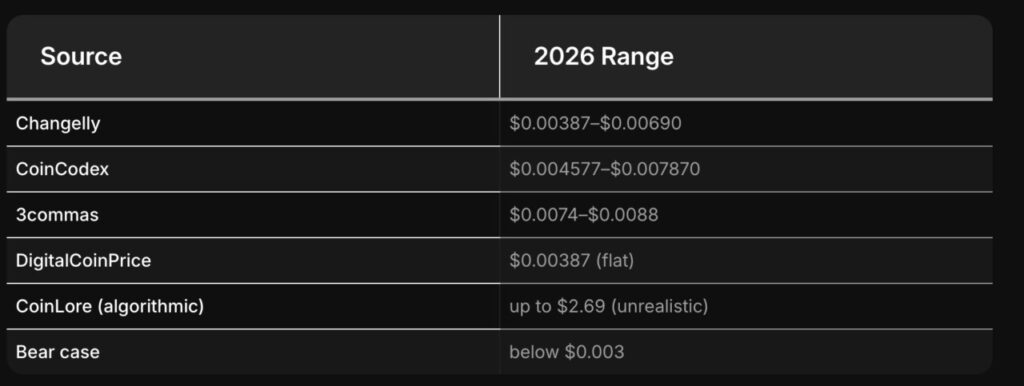
The source expressed a fairly firm assessment that REN in 2026 is more like a speculative micro-cap than an active utility token. With a price of around IDR68 and a market capitalization of only around US$3.8 million to US$4.7 million, or approximately IDR64.94 billion to IDR80.32 billion, REN could indeed experience a short-term surge if the crypto market enters a bullish phase. However, such potential is driven more by low liquidity and trader speculation, rather than real product development.
For those of you who are new to the world of cryptocurrencies, the main lesson is pretty clear. A low price doesn’t necessarily mean the asset is fundamentally attractive, and a deep drop doesn’t automatically make a token worthy of being called undervalued. In Ren’s case, it’s more important to understand not just how far the price has fallen, but whether the project still has a realistic product, utility, and recovery path.
Also Read: 5 Phases of BTC Cycle Towards $215,000: Target Bitcoin IDR3.65 Billion?
Follow us on Google News to stay up to date with the latest in crypto and blockchain technology. Check Bitcoin price, usdt to idr and tokenized nvidia stock price through Pintu Market.
As a safe crypto app, Pintu provides a crypto trading experience to access crypto gold investment easily and conveniently. You can also see today ‘ s gold jewelry price and today ‘ s gold bullion price to support your investment activities and portfolio diversification as well as learn crypto through Pintu Academy.
*Disclaimer
This content aims to enrich readers’ information. Pintu collects this information from various relevant sources and is not influenced by outside parties. Note that an asset’s past performance does not determine its projected future performance. Crypto trading activities are subject to high risk and volatility, always do your own research and use cold hard cash before investing. All activities of buying and selling Bitcoin and other crypto asset investments are the responsibility of the reader.
Reference
- Shayan Chowdhury/BlockchainReporter. Ren (REN) Price Prediction 2026, 2027 and 2030: Is REN a Profitable Investment?. Accessed April 10, 2026.